How to Store Your Peptides for Maximum Potency
Proper storage is the single most important factor in preserving peptide potency. Follow these simple guidelines to protect your investment and get the best results.
Why Storage Matters
Peptides are precision molecules. Their effectiveness depends on maintaining their structural integrity — and that means protecting them from heat, moisture, light, and repeated temperature fluctuations. Proper storage isn't just a technicality; it's the difference between a peptide that delivers full results and one that's lost potency before you even use it.
Storing Lyophilized (Freeze-Dried) Peptides
Lyophilized peptides are in their most stable form. In this dry, powdered state, they're highly resistant to degradation — but only if stored correctly:
- Temperature: Keep at -20°C (standard freezer) for long-term storage. Most lyophilized peptides remain stable for up to 24 months.
- Environment: Store in a dry, dark location away from humidity and direct light.
- Original vials: Keep sealed in their original vials until you're ready to use them.
- Avoid temperature cycling: Repeated warming and re-freezing degrades peptides over time. If you plan to use a peptide regularly, consider dividing it into smaller portions before freezing.
Peptides That Need Extra Care
Some peptides are more sensitive and benefit from colder storage:
- Peptides containing cysteine, methionine, or tryptophan residues: store at -80°C if possible
- Peptides with disulfide bonds: minimize exposure to air and moisture
- Very short peptides (under 5 amino acids): may be stable at refrigerator temperature (4°C)
Reconstituting Your Peptides
When you're ready to use a lyophilized peptide, follow these steps for best results:
- Let the vial warm up — Remove from the freezer and allow it to reach room temperature (about 15–20 minutes) before opening. This prevents condensation from entering the vial.
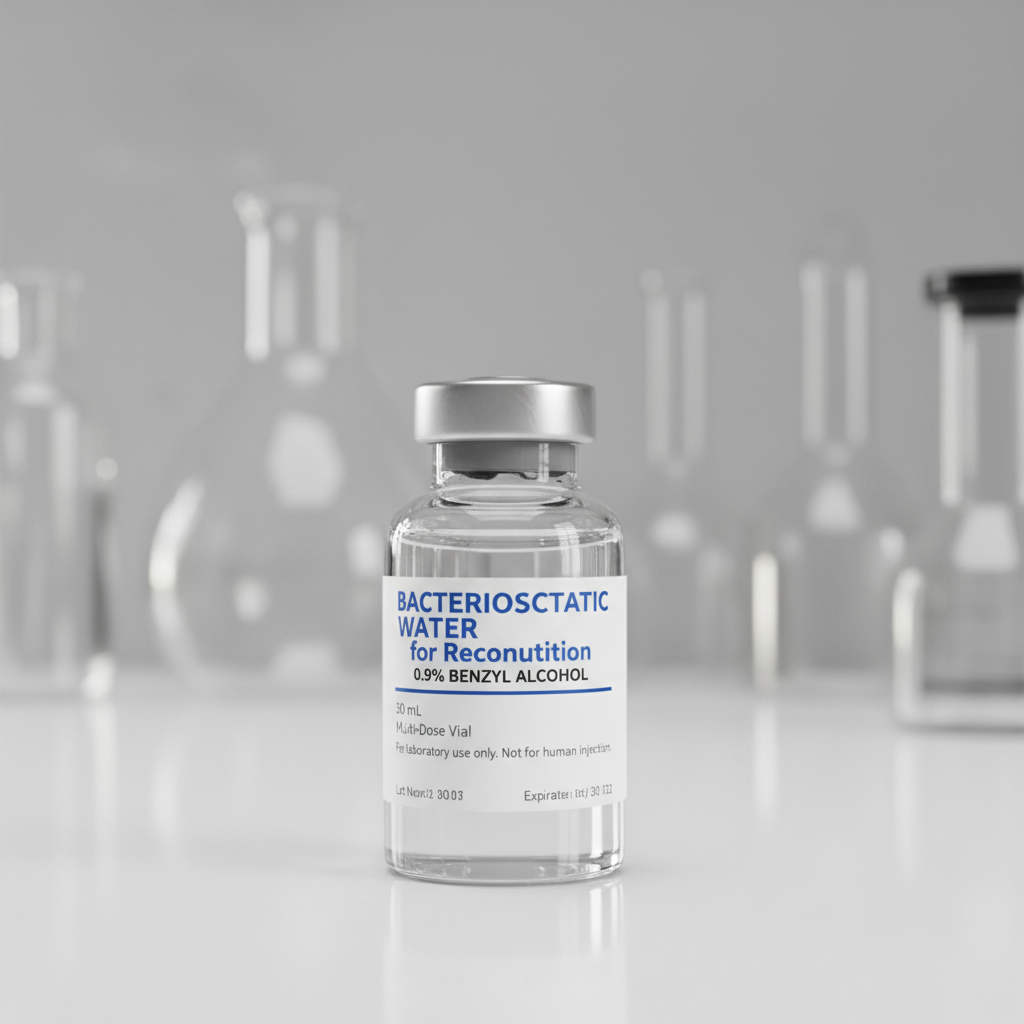
- Choose the right solvent — Most peptides dissolve readily in sterile or bacteriostatic water. Bacteriostatic water (containing 0.9% benzyl alcohol) is preferred if you plan to store the reconstituted solution for more than a few days.
- Add solvent gently — Inject the water slowly down the side of the vial. Do not squirt it directly onto the powder.
- Swirl, don't shake — Gently swirl the vial until the powder fully dissolves. Vigorous shaking can damage the peptide structure.
- Allow full dissolution — Give it 5–10 minutes to fully dissolve before use.
Storing Reconstituted Peptides
Once your peptide is in solution, it's more vulnerable to degradation:
- Refrigerate immediately at 2–8°C (standard refrigerator)
- Use within 28 days for optimal potency
- Protect from light — wrap the vial in foil or store in a dark container
- Avoid freezing reconstituted solutions — this can cause aggregation and loss of activity
- Use a fresh syringe each time to avoid introducing contaminants
Signs Your Peptide May Have Degraded
Discard and replace your peptide solution if you notice:
- Visible cloudiness or particulates in a previously clear solution
- Unexpected color change
- Unusual odor
- Significant pH shift (if you're testing)
Quick Reference Storage Guide
| State | Temperature | Duration |
|-------|-------------|----------|
| Lyophilized (sealed) | -20°C | Up to 24 months |
| Lyophilized (sensitive) | -80°C | Up to 24 months |
| Reconstituted | 2–8°C | Up to 28 days |
| Reconstituted (short-term) | Room temp | Same day only |
Following these guidelines ensures your peptides deliver the full potency and results you're investing in.
This article is for informational purposes for qualified laboratory researchers. All products referenced are not approved for human or veterinary consumption.